


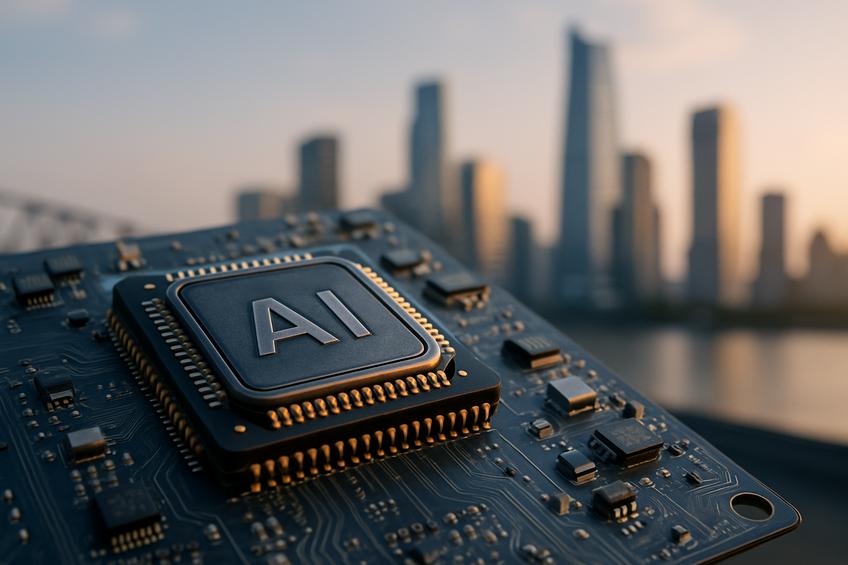
AI Hardware and IT Infrastructure: Transformations by 2025
Artificial intelligence (AI) is rapidly transforming the landscape of hardware and IT infrastructure, ushering in a new era of innovation poised to reshape business operations by 2025. Organizations across industries are significantly increasing investments in AI-specific hardware such as advanced AI PCs, servers, and accelerators, including GPUs and DPUs, which serve as critical components for AI workloads and machine learning processing. This trend reflects a strong market momentum and commitment to future technology enhancements with expectations for spending increases of over 20% in key AI infrastructure areas within the next year from S&P Global Market Intelligence.
These advancements are not just incremental upgrades but represent a fundamental shift toward AI-optimized architectures that enable faster processing, improved efficiency, and scalable AI deployment. Innovative startups play a pivotal role in this disruption by developing cutting-edge AI hardware accelerators and infrastructure solutions that amplify AI's capabilities across cloud, edge, and on-premise environments. As this ecosystem evolves, businesses gain access to more powerful computational resources tailored specifically for AI tasks, which facilitates smarter automation, real-time analytics, and improved decision-making comprehensive overview on Barreras IT.
2024 Trends in AI Hardware
The latest trends in AI hardware in 2024 highlight significant advances in processing technologies and innovative designs that are accelerating AI capabilities across industries. One of the most impactful developments is the emergence of heterogeneous computing, which integrates different processor types such as GPUs, FPGAs, and ASICs within a single system. This approach optimizes performance for a variety of AI workloads by leveraging the strengths of each processor type.
Another cutting-edge innovation is 3D chip stacking, where multiple silicon layers are vertically stacked to dramatically increase chip density while reducing power consumption and latency. This packaging technology enhances the efficiency and speed of AI processors, enabling more complex computations in smaller form factors.
Neuromorphic computing devices, which emulate the structure and function of the human brain, represent an exciting leap toward energy-efficient AI processing. Alongside these, analog neural network accelerators using CMOS-compatible ferroelectric memory provide faster analog computation, pushing the boundaries of AI hardware speed and power efficiency. Looking beyond current technologies, quantum computing holds promise for AI by offering unprecedented problem-solving capabilities that surpass classical computers, although it remains largely in the experimental stage. Together, these advancements in AI hardware—from heterogeneous architectures and 3D chip designs to neuromorphic and quantum computing—are driving a transformative era in AI, broadening the scope and performance of AI applications as discussed by IBM.
Leading Players in AI Hardware Development
The AI hardware landscape is rapidly evolving, driven by innovative startups and established leaders alike. NVIDIA continues to lead with groundbreaking AI technologies, fueling advancements across industries from gaming to robotics. Their AI investments and platforms enhance cloud computing capabilities and enable smarter, more efficient machine learning applications, shaping the future of AI integration in real-world systems discussed in detail at Plerdy.
Tenstorrent is making a significant impact with its AI Graph Processors and high-performance RISC-V CPUs designed specifically for artificial intelligence workloads. Their approach focuses on scalable, configurable chiplet architectures and a robust software stack that optimize AI and high-performance computing, positioning Tenstorrent as a key player in next-generation AI hardware development Tenstorrent Vision.
Axelera AI specializes in purpose-built AI hardware acceleration with its Metis™ AI platform, delivering exceptional performance and power efficiency for edge AI inference. Their upcoming Europa AIPU product sets a new industry standard for affordability and energy efficiency, enabling AI applications in diverse sectors such as manufacturing and healthcare with revolutionary edge computing capabilities Axelera Announces Europa AIPU.
Impact of AI Startups on IT Infrastructure
AI startups are fundamentally transforming traditional IT infrastructure models by driving notable improvements in efficiency, scalability, and cost reduction. These startups leverage AI-powered process automation to streamline operations, enabling businesses to drastically cut expenses while enhancing agility. For example, by 2026, it is anticipated that 75% of businesses will adopt AI automation tools, which allow for smarter resource allocation and operational agility from Lucid.Now.
Efficiency gains are achieved through AI-driven optimization techniques in areas like supply chain management and fraud detection, which reduce waste, minimize delays, and prevent losses. Scalability is enabled by designing AI infrastructures that can dynamically handle increasing data loads and complex AI workloads using advanced technologies such as containerization and orchestration platforms. This adaptability ensures that startups can meet rising demand without costly overhauls to hardware or staff capacity.
Moreover, AI startups challenge traditional IT cost structures by offering flexible, cloud-based models and managed services that decrease the need for heavy upfront investment while maintaining high performance and reliability. Managed Service Providers (MSPs), often incorporating AI technologies themselves, facilitate this transition by providing scalable, proactive IT management that supports business growth through continuous access to specialized expertise, cybersecurity, and automated help desk solutions on Barreras IT.
The Future of AI Hardware and IT Infrastructure
As AI startups continue to innovate, the future of hardware and IT infrastructure is poised for remarkable transformation. Key trends include the rise of specialized AI infrastructure startups that integrate advanced hardware breakthroughs with scalable cloud-native platforms. These developments enable increasingly powerful and efficient AI workloads, leading to new opportunities and challenges in cost management, data privacy, and system reliability.
Emerging technologies like heterogeneous computing—which combines GPUs, FPGAs, and ASICs—and 3D chip stacking promise to significantly enhance AI processing capabilities. Additionally, neuromorphic computing, inspired by the human brain, alongside quantum computing, may revolutionize how complex problems are solved and how AI operates at the edge and in the cloud. For businesses and consumers, these advancements will facilitate the deployment of more capable AI-driven applications, improve real-time data processing, and enable smarter automation across industries.
However, navigating regulatory landscapes and ensuring robust cybersecurity will be critical as AI-powered infrastructure becomes more integral to operations. Organizations that leverage these innovations thoughtfully will unlock greater operational efficiency, enhanced decision-making, and new product possibilities. To prepare for these changes, exploring managed AI-centric IT solutions and sustainable cloud infrastructures can offer competitive advantages in our overview of AI breakthroughs and industry shifts.
Sources
- Axelera AI - Axelera Announces Europa AIPU
- Barreras IT - AI In 2025: Key Breakthroughs And Industry Shifts To Watch
- Barreras IT - Top 10 AI Hardware Accelerators Revolutionizing The Market
- Barreras IT - How Managed Service Providers Enable Scalable IT Support For Business Growth
- GuruStartups - Top AI Infrastructure Startups Building the Future of Compute 2025
- IBM - Trends in Hardware Gets AI Updates 2024
- Lucid.Now - Scaling Startups with AI Resource Allocation
- Plerdy - Nvidia's AI Innovations
- Tenstorrent - Tenstorrent Vision