


Understanding Server Racks in IT Infrastructure
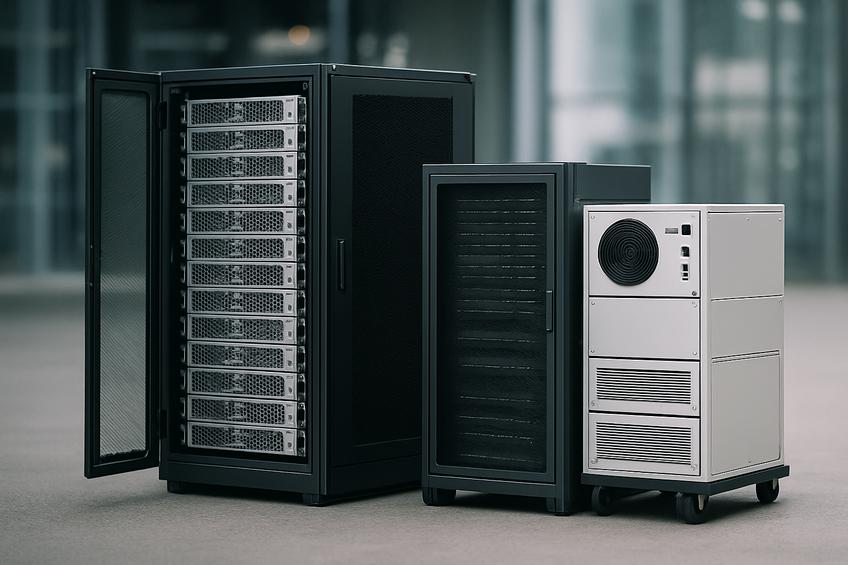
Server racks are fundamental components in modern technology infrastructure, serving as the backbone that physically supports and organizes IT equipment in data centers and server rooms. Initially simple frameworks, server racks have evolved significantly to become sophisticated enclosures that accommodate not only servers but also power distribution units, cooling mechanisms, and monitoring systems. Their design optimizes space utilization, airflow management, and equipment security, ensuring efficient operation and maintenance of critical hardware. Learn more about the role and importance of server racks in data centers at Encor Advisors.
Over time, the importance of server racks has grown in tandem with the increasing complexity and density of computing environments. Proper selection and configuration of server racks are essential to accommodate varying equipment sizes, weight capacities, and cooling needs, which directly impact the reliability and performance of data centers.
Market Overview of Server Racks
The global data center rack server market was valued at approximately USD 84.11 billion in 2023. The market is projected to experience robust growth, with a compound annual growth rate (CAGR) of about 12.72%, reaching an estimated valuation of USD 247.09 billion by 2032. This significant expansion is driven by increasing demands for efficient data processing and storage across industries, fueled further by the rise of cloud computing, big data analytics, and the growing need for scalable IT infrastructure. Market valuation and forecast details are provided by Zion Market Research.
Rack servers in data centers continue to evolve, integrating advanced processors, memory, and storage technologies to handle complex workloads efficiently. This growth reflects broader trends in IT infrastructure, including agility, automation, and enhanced physical and cybersecurity measures to support 24/7 availability and high resilience.
Advancements in Rack Server Technology
In 2023, the leading rack servers demonstrated significant advancements in performance, efficiency, and specialized features catering to diverse enterprise needs. Dell’s PowerEdge series stood out by maximizing performance across a broad spectrum of applications, offering configurations with the latest AMD EPYC and Intel Xeon Scalable processors. These servers are also available as pre-configured, tested, and certified vSAN Ready Nodes, making them versatile for virtualized environments and data center deployments.
ASRock Rack received attention for its specialized servers optimized for cloud computing and AI workloads. Their designs leverage cutting-edge AMD architectures and NVIDIA GPUs, such as the NVIDIA A100 and A30, delivering powerful solutions for artificial intelligence training and accelerated computing tasks. AMAX also offers a diverse portfolio of reference systems focused on performance, density, and efficiency, allowing customization across compute, storage, networking, power, and software components.
Beyond raw hardware specifications, advancements in remote management for rack servers have become pivotal. Solutions like KVM over IP devices empower IT professionals to maintain, troubleshoot, and deploy servers remotely, minimizing downtime and reducing operational costs. Discover more about the latest server technology trends in scientific and high-performance computing from Scientific Computing.
Choosing the Right Server Racks
When selecting server racks, evaluating critical aspects such as space efficiency, cooling options, and scalability ensures optimal performance and future-proofing for your IT infrastructure.
Space Efficiency: Consider the height and footprint of the rack relative to your server room. Taller racks can accommodate more equipment within a smaller floor space, offering cost-effective density. However, it's important to maintain enough clearance above the racks for air circulation, cable management, and ductwork. For detailed guidance on server rack sizes and considerations, see the data center expert overview.
Cooling Options: Effective heat dissipation is vital to prevent hardware failure. Air cooling is the most common method, so ensure your racks allow proper airflow without cramping the equipment. Alternatively, if you plan to use advanced methods such as liquid cooling, consider racks that accommodate those technologies.
Scalability: Select racks that can grow with your business. Modular designs and adjustable rails allow you to rearrange equipment easily. Planning for scalability avoids costly replacements as your infrastructure expands. Learn more about managing rack-mounted servers and remote management solutions on our GL.iNet Comet PoE vs Comet Pro article.
The Rise of Modular Data Centers
Modular data centers are transforming the IT infrastructure landscape by integrating emerging technologies and embracing future trends that enhance their development and operational efficiency. One key advancement is the adoption of advanced cooling systems that improve energy efficiency and reduce operational costs, crucial for managing the heat produced by high-density servers. The market for modular data centers is expected to grow rapidly, driven by the need for fast deployment, adaptability, and efficiency across industries such as technology, finance, and government.
Environmental sustainability is also shaping modular data centers, with an increased focus on green IT solutions. These include leveraging renewable energy sources and designing energy-efficient modules that minimize carbon footprints. The “Modular Data Centers - Global Strategic Business Report” projects a market growth from US$32.4 billion in 2024 to US$85.2 billion by 2030, emphasizing innovations in cooling, energy efficiency, and IT infrastructure as core drivers according to ResearchAndMarkets.com.
For business owners looking to leverage advances in modular data centers while ensuring tailored support, consider exploring our IT services to support your infrastructure needs.
Sources
- Barreras IT - Managed IT Services
- Data Center Knowledge - A Guide to Server Rack Sizes for Data Centers
- Encor Advisors - Guide on Server Racks
- Data Centre Magazine - Modular Data Centers Global Strategic Business Report
- Scientific Computing - Latest Server Technology Trends in HPC
- Zion Market Research - Data Center Rack Server Market Report
- Barreras IT - KVM Over IP Solutions